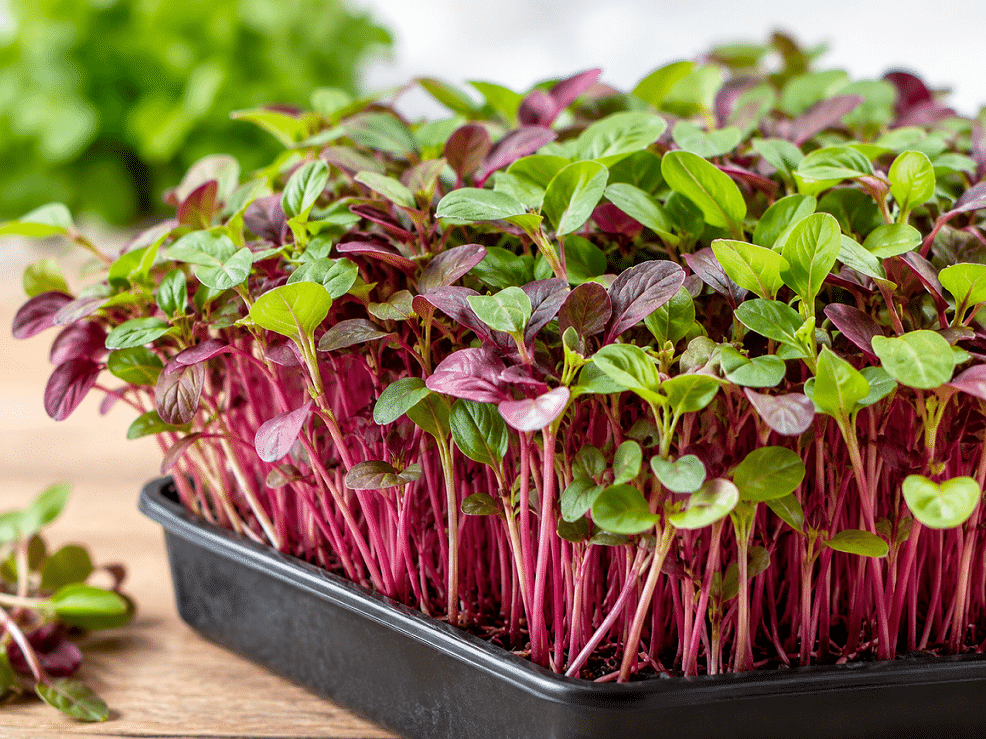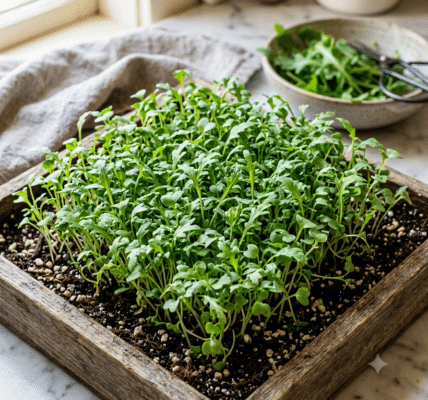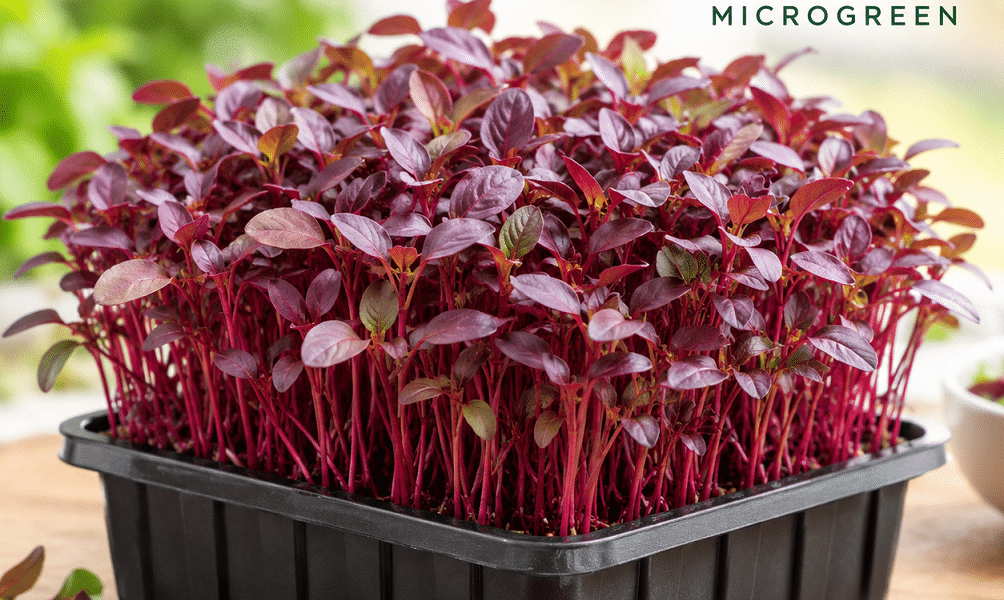
Amaranthus Red Garnet is one of the most attractive amaranth microgreens, known for its deep burgundy-red stems and leaves. It is popular among microgreen growers, chefs, restaurants and health-conscious consumers because of its striking colour and mild flavour.
Depending on the region, amaranth is known by names such as Chaulai or Chulai in Hindi, Rajgira and Math in Maharashtra, Tandaljo in Gujarat, Notey Shak in Bengal, Thotakura in Andhra Pradesh and Telangana, Keerai in Tamil Nadu, Dantina Soppu or Harive Soppu in Karnataka, and Cheera in Kerala. Regional names can vary, and these names may refer to different Amaranthus species or cultivars.
Appearance
Red Garnet develops burgundy to deep-red stems and reddish-purple leaves under suitable growing conditions. The colour is one of its strongest commercial characteristics. Good light exposure generally helps develop its characteristic pigmentation.
The microgreens are normally harvested when the cotyledons are fully developed and the first true leaves are beginning to appear. Commercial harvest timing can vary according to growing conditions and the market requirement.
Flavour Profile: Mild, gently sweet and nutty, with a subtle earthy/beet-like finish. The texture is tender and delicate, making Red Garnet suitable for eating raw. Its flavour is generally less overpowering than many mature leafy greens.
Nutritional profile
Amaranth microgreens are a source of various vitamins, minerals and plant bioactive compounds. Red/purple amaranth varieties are also notable for their pigments, including betalain-related compounds and other antioxidant phytochemicals.
The exact nutrient concentration can vary significantly with cultivar, seed quality, growing medium, light, harvest age and growing conditions.
It is therefore better to avoid presenting a fixed nutrient value unless you have laboratory analysis for your particular product.
Health and wellness
Amaranth microgreens can form part of a balanced diet and provide micronutrients and plant compounds. Vitamin K contributes to normal blood clotting and bone health, while vitamin A-related compounds support normal vision and immune function.
However, claims such as “reduces systemic inflammatory markers” or “promotes glowing skin” are stronger medical/health claims and should ideally be supported by specific scientific evidence for the cultivar and preparation. Rich in plant-based nutrients and antioxidant compounds that can complement a healthy, balanced diet.
Growing Guide:
- Seed Density per 10×20 Tray: 20g
- Soaking: No soaking required
- Mould Prone: Yes
- Stack Days: 3-4 Days
- Blackout Days: 1-2 Days
- Harvest Days (Minimum): 10 Days
- Harvest Days (Maximum): 12 Days
- Difficulty: Hard
- Spicy: No
- Good for smoothies: No
- Germination: 24 Hours
- Average Yield per 10×20 Tray: 80g to 100 grams