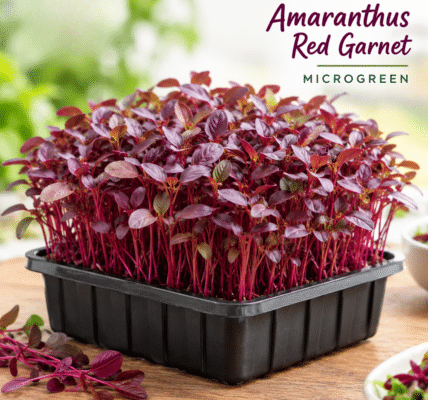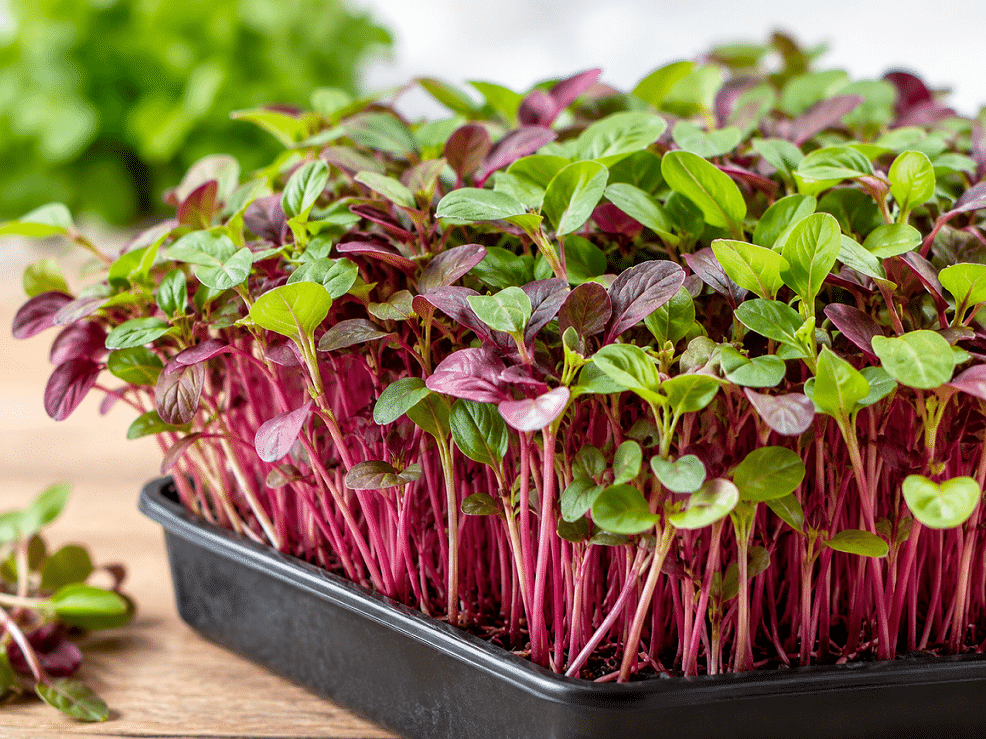
About Amaranth Red
Amaranth is a hardy plant belonging to the genus Amaranthus. Some species are valued for their edible leaves, seeds and tender stems. Amaranth has been cultivated and consumed in India for generations as a leafy vegetable as well as a grain or pseudo-cereal in traditional foods.
It is particularly interesting for modern agriculture as a leafy vegetable, grain crop, microgreen and specialty health food.
Amaranth Red also known as,
• Hindi: Lal Saag, Lal Chaulai
• Marathi / Gujarati: Lal Math, Lal Bhaji
• Konkani / Goan: Tambdi Bhaji
• Tamil: Senth keerai, Arai Keerai (red variety)
• Telugu: Erra Thotakura
• Kannada: Kempu Harive, Rajgiri
• Odia: Kosala
• Bengali: Lal Shak
• Malayalam: Cheera (red)
- Flavour Profile: Very mild, delicate, and deeply earthy with a subtle sweetness like of fresh spinach or raw beets. It is little bit different than the regular Amaranthus.
- Nutrient Profile: Exceptionally concentrated in Vitamins A, C, E, and K, as well as vital minerals like Calcium, Iron, Magnesium, Phosphorus, and Potassium. It is also one of the rare greens containing the essential amino acid Lysine.
- Health Benefits: Supports deep cellular repair and muscle tissue growth due to its amino acid profile. Helps lower bad cholesterol, stabilizes cardiovascular pathways, and protects bone density.
- Seed Density per 10×20 Tray: 20g
- Soaking: No soaking required
- Mould Prone: Yes
- Stack Days: 3-4 Days
- Blackout Days: 1-2 Days
- Harvest Days (Minimum): 10 Days
- Harvest Days (Maximum): 12 Days
- Difficulty: Hard
- Spicy: No
- Good for smoothies: No
- Germination: 24 Hours
- Average Yield per 10×20 Tray: 80g to 100g