Uses of Microgreens in Different Businesses – Potential clients for Microgreens
Microgreens is a versatile product and demand for microgreens is increasing gradually different businesses as a raw material, here is list of these businesses where microgreens is acting as as a raw material or as a direct intake/ serving product. Though right now in 2026 market is niche and it will take some more time to adopt microgreens as a raw material for processing. Some businesses are already selling Microgreens in restaurants/cafes, supermarkets, Health and Wellness Businesses and some companies already started testing microgreens as a raw material for their final/finished product.
Selling to Restaurants and Cafes
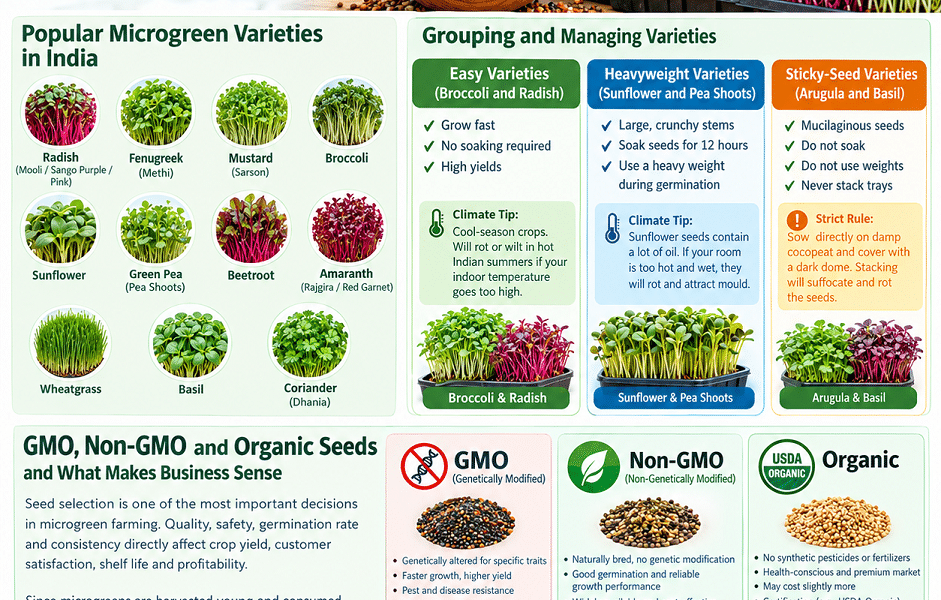
Five-star hotels, high-end cafes, and premium restaurants buy microgreens in bulk. Chefs use them to make their plates look beautiful and add sharp flavours. Varieties like purple Radish Sango and spicy Mustard are highly popular in this sector.
Selling to Retail Stores and Supermarkets
You can pack fresh-cut microgreens into clear plastic clamshell containers and sell them to organic grocery stores. Because retail customers expect crisp, fresh greens, you must keep them cold during transport.
Health and Wellness Businesses
Gyms, juice bars, and wellness centres use wheatgrass, sunflower, and pea shoots to make healthy green juices and smoothies. Some companies also dry these greens and grind them into superfood powders or wellness supplements.
Industrial – where demand is rising but pace is slow.
Future large-scale opportunities may come from:
o Nutraceutical manufacturing
o Functional foods
o Freeze-dried products
o Health drinks
o Nutrient extraction
(As processing industries expand, demand may move from kilograms to hundreds of kilograms per week.)
Conclusion:
The Indian microgreens market is currently a rapidly emerging industry with strong long-term growth potential. While the sector faces challenges such as low awareness, perishability, and operational costs, increasing health consciousness and urban farming trends are creating major opportunities. The microgreen industry in India is still at an early growth stage but shows strong long-term potential due to increasing health awareness, rising demand for nutrient-dense foods, growth of premium restaurants, expansion of modern retail, and the rapid adoption of urban farming concepts. Major metropolitan cities such as Mumbai, Delhi, Bengaluru, Hyderabad, Pune, and Chennai are witnessing growing demand from restaurants, health-conscious consumers, wellness brands, and specialty food businesses.
Restaurants and premium consumers currently dominate demand, but future growth is expected from retail, subscription services, nutraceutical companies, and food-processing industries. With improvements in technology, cold-chain logistics, and consumer education, microgreens could become an important segment of India’s premium agriculture and functional food economy.
Compared to traditional agriculture, microgreen farming requires relatively low space, lower water consumption, shorter crop cycles, and faster returns, making it an attractive business opportunity for small-scale entrepreneurs, urban growers, and commercial farming start-ups. However, long-term success in this industry depends heavily on maintaining consistent quality, proper hygiene, reliable seed sourcing, efficient climate management, and building strong customer relationships.
Growers who focus on product consistency, food safety, branding, and market education are likely to achieve better profitability and sustainable business growth. As awareness about functional foods and healthy eating continues to increase in India, the microgreen sector is expected to expand steadily and create new opportunities across retail, hospitality, health food, and food processing industries.