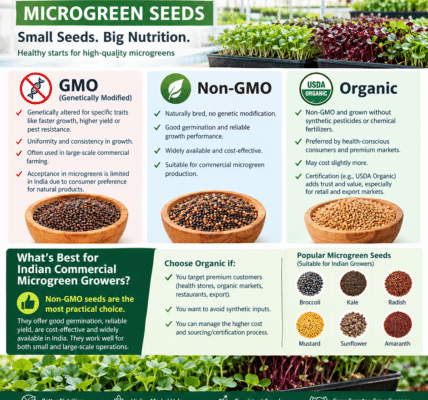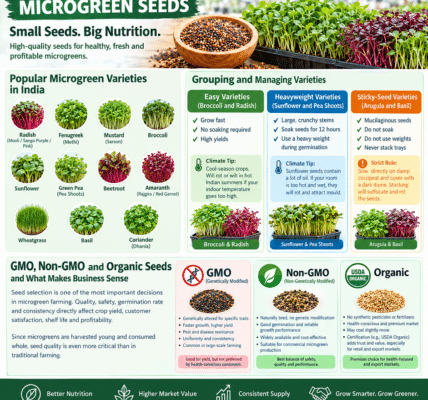
The Big Business of Tiny Greens: Emerging Opportunities and Challenges in Microgreens in India.
Ever wondered how those delicate, colorful little greens resting on top of restaurant dishes packs so much punch? They’re called microgreens, and they’ve quietly evolved from a fancy chef’s garnish into a full-blown revolution in urban farming and superfood nutrition. A comprehensive review paper titled “Emerging Opportunities and Challenges in the Microgreens Business: A Comprehensive Review” delves deep into this fast-growing sector. Published in the Journal of Advances in Biology & Biotechnology (2026) by by three researcher – Kumari Manisha, Rajesh Kumar and Kamaldeep Kaur. All three authors belong to the Department of Agriculture at Sant Baba Bhag Singh University, located in Jalandhar, Punjab, India.
This insightful research sheds light on how these tiny plants are grown, why they’re so good for us, and what it takes to build a business around them.
Here is a summery of their findings,
The Ultimate Superfood:
As more people look for clean, chemical-free, nutrient-rich foods to add to their daily diets, microgreens have stepped directly into the spotlight. Here’s why health enthusiasts and researchers love them:
Nutrient Powerhouses:
Microgreens can contain up to 9 to 40 times more nutrients than their fully grown adult vegetable counterparts! They are packed with essential minerals like potassium, iron, zinc, magnesium, and copper.
Rich in Antioxidants:
They are loaded with vitamins C, E, and K, along with high concentrations of phenolics and carotenoids. These compounds help neutralize free radicals, support your immune system, reduce inflammation, and lower the risk of chronic diseases.
Versatile & Tasty:
Beyond their health perks, they bring bold flavors, vibrant textures, and bright colors to salads, sandwiches, smoothies, and gourmet meals.
How Are Microgreens Cultivated?
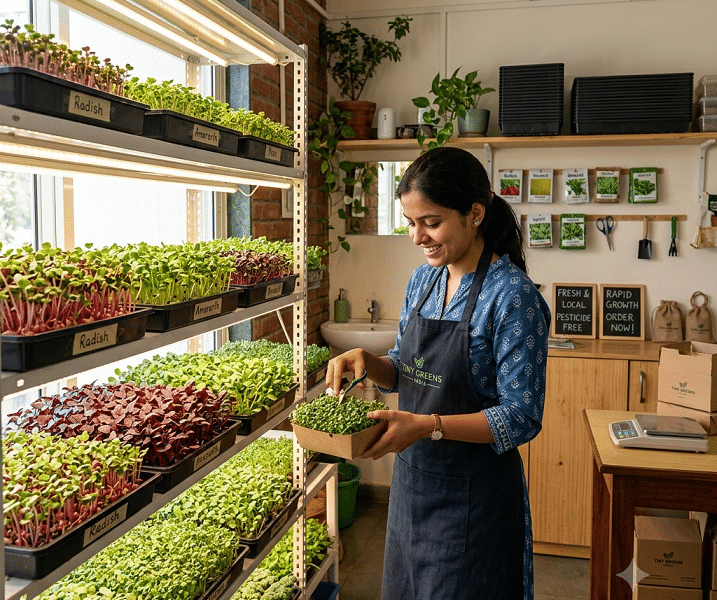
One of the neatest things about microgreens is their adaptability. Because they don’t require deep root space, you can cultivate them indoors, outdoors, in vertical farms, or even in a tiny apartment balcony or basement.
Microgreens Growing Methods:
Soil-Based Growing: Traditional organic soil mix or peat mixes provide a simple, nutrient-dense base.
Soilless & Hydroponic Systems:
Many growers use Coco coir (coconut husk fiber) because of its excellent water retention, aeration, and natural antifungal properties. Other soilless systems include hydroponics (growing in nutrient-rich water channels using fiber mats) and aeroponics (misting bare roots with a nutrient solution).
Outdoor Methods:
Outdoor growers often use raised soil beds, shallow containers, or shade-net houses to protect the delicate seedlings from extreme weather.
Key Factors for Success
Microgreens need proper light (around 12 to 16 hours a day), controlled temperature, humidity, and adequate airflow to thrive and prevent mold growth.
The Business Side: Emerging Opportunities
Why are so many entrepreneurs jumping into the microgreens market? The commercial advantages are hard to ignore:
Insanely Short Growth Cycles: Going from seed to harvest takes just 2 to 3 weeks. This means rapid turnaround times and continuous harvests.
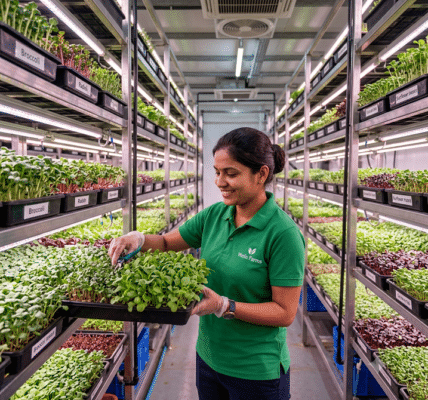
Low Startup Costs & Small Space Requirements: You don’t need acres of land to run a farm. A indoor vertical setup using racks and LED lights can yield impressive amounts of produce in a tiny footprint.
High Profitability: Indoor microgreen farms boast profitability margins around 60% due to strong market prices and rising consumer demand.
Eco-Friendly & Sustainable: Microgreens require 158 to 236 times less water than mature field crops, use no pesticides, and can be grown locally in urban settings to cut down on transportation emissions.
The Real Challenges: It’s Not All Smooth Sailing
While the business potential is exciting, the paper emphasizes that growers face several hurdles:
Short Shelf Life: Freshly harvested microgreens only last 2 to 3 days at room temperature. Even with proper cold storage (at around 4 degree celcious), their shelf life is capped at about 14 days.
Microbial & Mold Risks: Overwatering or poor ventilation creates moisture traps, leading to mold or bacterial issues that can ruin an entire crop.
Urban Market Saturation & Competition: As indoor farming becomes trendy, competition rises, and growers must work hard to educate consumers and build steady customer relationships.
Lack of Industry Standardization: Inconsistent labeling and quality definitions can confuse buyers.
Looking Ahead: What Does the Future Hold?
The future of microgreens is bright. As smart agriculture advances—leveraging AI, automated climate control, and improved post-harvest technologies—growers will be able to improve yields and extend shelf life even further.
To unlock the full market potential, the researchers point out that future studies need to focus on optimizing pre-processing treatments, standardizing seed germination methods, and conducting clinical trials to validate their specific therapeutic health benefits.
Whether you are looking to start a small home business or simply add a nutrient boost to your daily meals, microgreens prove that powerful things really do come in small packages!
Credit to Kumari Manisha, Rajesh Kumar and Kamaldeep Kaur. All three authors belong to the Department of Agriculture at Sant Baba Bhag Singh University, located in Jalandhar, Punjab, India