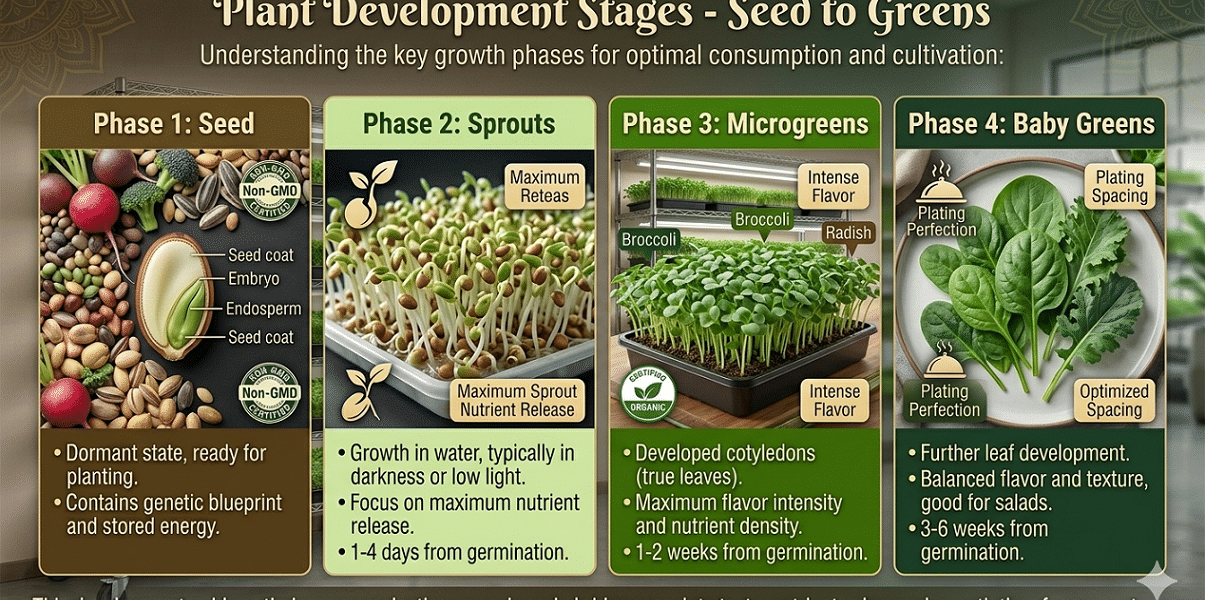
Differences Between Sprouts, Microgreens, and Baby Greens
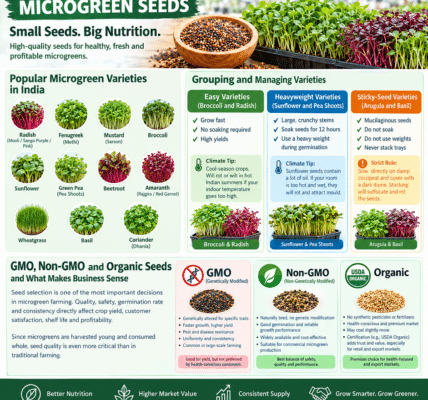
You must understand the differences between sprouts, microgreens, and baby greens. They have different growing methods, harvest times, and food safety rules.
Growing in Humid Indian Climates
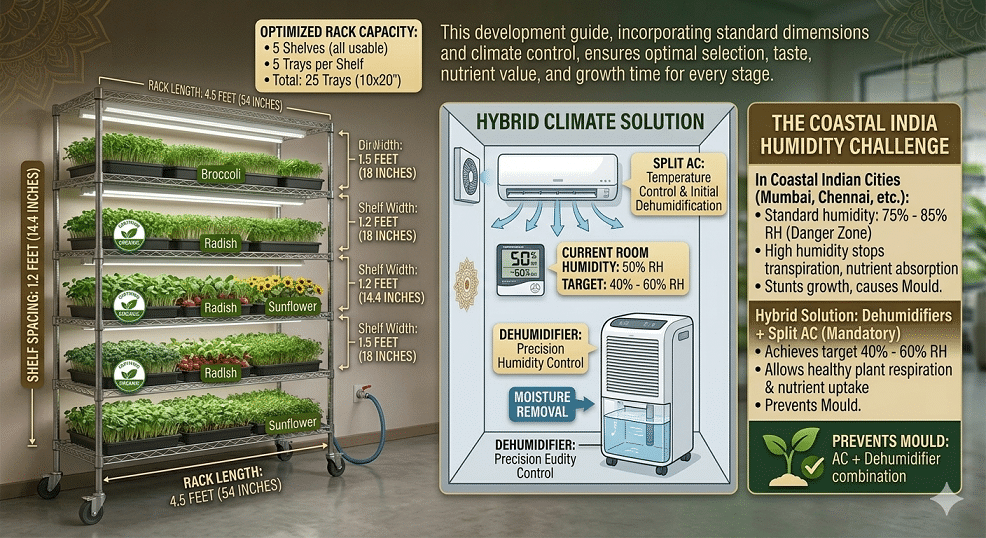
If you live in coastal India (such as Mumbai, Chennai, Kolkata, or Goa), the humidity is usually between 75% and 85% all year.
This high humidity is dangerous for microgreens. When the air is full of moisture, the plants cannot release water from their leaves. This stops them from absorbing fresh water and nutrients from the roots, which stunts their growth and causes mould.
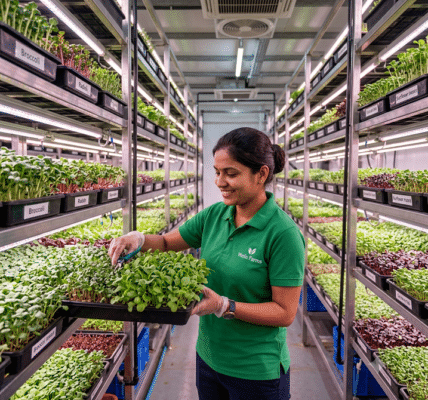
To grow microgreens successfully in these areas, you must use Dehumidifiers and Split Air Conditioners (AC). These machines are mandatory to keep your room at the target 40% to 60% relative humidity range.
How a Microgreen Seed Grows – Step-by-Step
Every microgreen tray goes through a predictable growing process:
- Water Intake (Imbibition): The dry seed absorbs water. This causes the seed to swell and crack open its outer shell. This triggers the natural growth hormones inside the seed.
- Root Emergence: The first tiny root (the radicle) grows downward into the cocopeat to anchor the plant and search for water.
- Stem Stretching: The stem (the hypocotyl) grows upward. In the dark, it bends like a hook to protect the delicate baby leaves as it pushes through the medium.
- Baby Leaves Open (Cotyledons): Once the stem senses light, it straightens up, and the first baby leaves (cotyledons) expand. These leaves are thick and full of nutrients stored inside the seed.
- True Leaves Appear: After a few days, the plant grows its first “true leaves” from the centre. These leaves look and taste like the mature vegetable.
Rule: Harvest your microgreens when the baby leaves are fully open and the true leaves are just starting to appear as tiny buds.
Why Microgreens are different from Sprouts and Baby Greens
Scientific research shows that microgreens contain 4 to 40 times more vitamins and minerals by weight than mature vegetables.
During germination, the seed concentrates all its stored energy, vitamins, and minerals to help the young plant grow. When you harvest at this early stage, you eat these nutrients in a highly concentrated form before they are diluted by the water and fibre of a larger, mature plant.
Key Nutrients and Health Benefits
- Vitamin A: Excellent for eye health and immune support. Found in high amounts in Kale and Cabbage.
- Vitamin C & Folate: Helps protect cells and boosts immunity. Pea microgreens are very rich in Vitamin C and folate.
- Vitamin E: Protects cells from damage. Highly concentrated in Sunflower microgreens.
- Sulforaphane: A compound that helps the body fight cell damage and prevent disease. Broccoli microgreens contain exceptionally high levels of this compound.
Conclusion
Microgreens are widely recognized for their high nutritional density and are considered one of the most nutrient-rich functional foods available in modern diets. Harvested at an early growth stage, these young edible greens contain concentrated levels of vitamins, minerals, antioxidants, enzymes, and beneficial plant compounds that support overall health and wellness. Many microgreen varieties are rich in vitamins A, C, E, and K, along with essential minerals such as potassium, calcium, magnesium, iron, and zinc.
Microgreens also contain antioxidants and phytonutrients that may help reduce oxidative stress and support immune function. Different varieties offer unique nutritional profiles; for example, broccoli microgreens are known for their sulforaphane content, while sunflower and pea microgreens are valued for their protein, chlorophyll, and mineral composition. Since microgreens are typically consumed fresh and harvested within a short growth cycle, they often retain excellent flavour, texture, and nutritional quality when handled properly. Their intense nutrient concentration, combined with attractive appearance and culinary versatility, has contributed to their growing popularity among health-conscious consumers, restaurants, fitness communities, and wellness-focused food businesses in India and around the world.